We conducted a survey in South Africa on dog owners and their feelings towards dog training. The aim of the survey was to get a better understanding of the sentiment people have towards dog training in person and online, with our main goal being to understand what the main reasons why people want to train their dogs and how they go about doing it. Not only did we gather valuable information from over 2000 participants, but we also established that there is a need for access to dog trainers in areas where there aren't any. Which feeds well into our plan of launching an online dog training program. There will be more on this at the bottom if you are interested.
Now, let's check out the survey results.

The first few questions were to establish which part of the country the respondent lived, whether they are close to town centers, and how many dogs they had. Here are the results of that:
Provinces
- KwaZulu Natal 19%
- Eastern Cape 6%
- Western Cape 23%
- Northern Cape 1%
- Free State 3%
- Gauteng 38%
- North West 3%
- Limpopo 2%
- Mpumalanga 4%
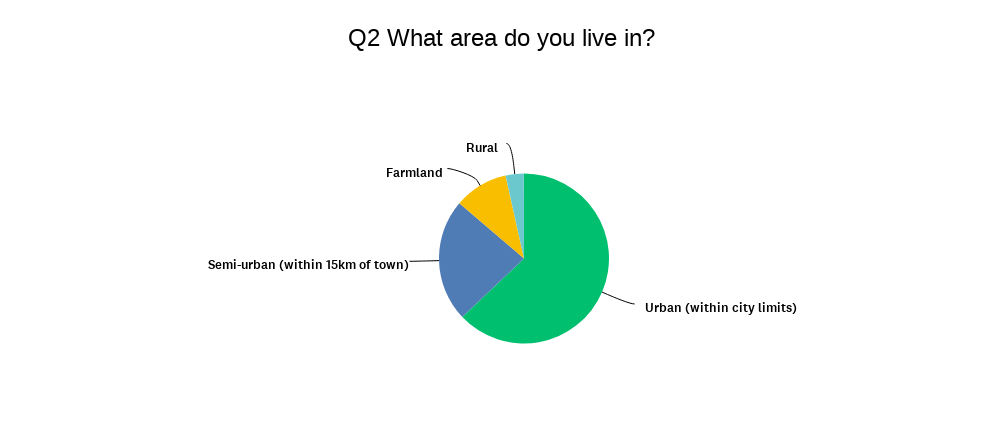
Most people live in urban areas, which we classified as within city limits, and semi-urban areas which we classified as within 15km of town.
The primary reason people get dogs

Out of the 2183 responses, 88% of people said they got their dogs for companionship. This is why most of us get dogs, because they are 'man's best friend'. There is nothing better than coming home to a happy dog! The joy we get when playing fetch or seeing our dog get the zoomies and run around seemingly having lost all control, it's just too funny! But what makes a companion dog even better is being able to take it out in public, without stress. This leads, excuse the pun, into one of the most important questions of the survey, which is the behaviour people most wanted to change in their dogs.
The top issue that people have is barking and lunging at other dogs and people. The second biggest issue is leash pulling. These issues generally go hand in hand and are, in most cases, a result of poor basic obedience. Just imagine how much better life could be with an obedient dog. This links in with the third biggest issue which is general obedience. This is things like, sit, stay, coming when called, not jumping, etc. There were some more serious issues brought up by people too, like biting, food aggression, and destructive behaviour. All these issues can be dealt with through some good training, which unfortunately for most is hard to come by.
When asked if people had done dog training before, and what type of training. The 57% that had done training, most had done obedience training and puppy classes. Which is great news, but this also indicates that about 42% of people have never trained their dogs. Now, the main reasons for this are cost of training, time constraints and no trainers nearby. let's take a deeper look into this.
Reasons why people don't get their dogs trained.
Time
Getting a dog is always an exciting idea, but what many people don't consider is the time and effort that is needed to keep an obedient dog. When it comes to time need to raise an obedient dog to adulthood, we normally recommend at least 30 minutes a day, which isn't much in the bigger scheme of things. this would equate to roughly 15 hours a month. If you stuck to that for a full year, your dog would easily be the most well-behaved dog in your town. why? because nobody wants to find the time to do.
Cost
The cost is another barrier for almost 40% of respondents. Many people want to train their dogs but the added cost to just trying to survive in this country is difficult to absorb. There seems to be a very unclear line between what people are willing or able to pay for dog training, and what a dog trainer feels their time is worth. Over 80% of people thought that R500 or less is a fair price for a 1-1 session with a dog trainer. This seems fair enough, but looking deeper, the majority (45%) of that bracket of people actually think R300 or less is the fair price. A quick google search will reveal that getting a private dog training session for that price will either get nowhere, or a backwards by getting a poor-quality dog trainer. The old saying goes 'you get what you pay for'. Some of you may have seen the diagram of time, cost a quality. Here is the basics of what I'm talking about.
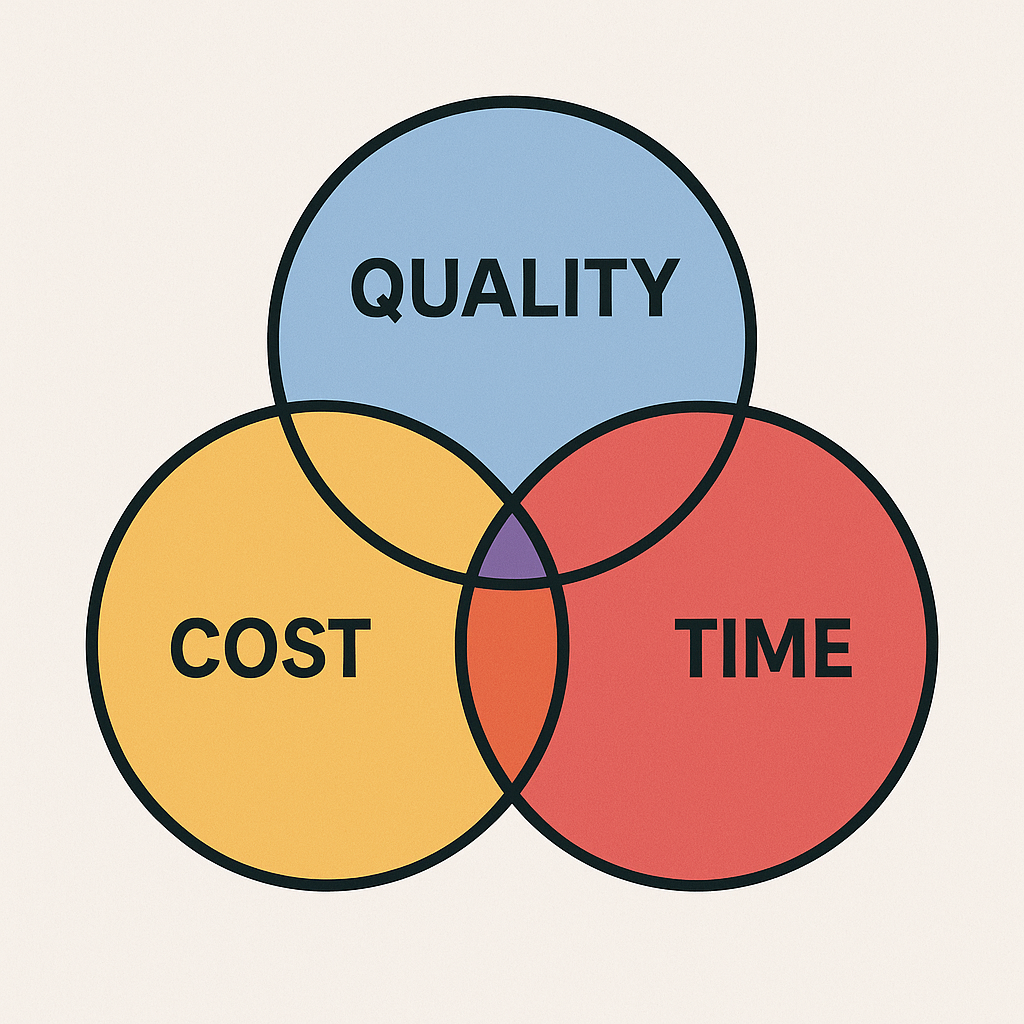
it basically indicates that if you want something done quick and cheap, there will be no quality to the work, if you willing to pay big you will get quality but it will take time. The sweet spot is where time, quality and cost intersect, and this is where everyone wants to be. Anyway, back to the survey.
Proximity to dog trainers
The third issue was the proximity of people to a dog trainer, over 20% of people said they weren't close enough to a dog trainer. When asked how far people would travel for dog training 14% said they would simply not travel for dog training, and a massive 67% said they would only travel up to 20km for training.
Online dog training
This throws the ball nicely into online dog training. What was interesting about this section of the survey is that most people wanted online dog training, about 57% said yes. and a close split of 45% wanting a one-time purchase full course of pre-recorded videos, and 42% preferring a subscription type program with a chat group and live videos with a trainer.

This is where we are heading towards. We are shifting our main focus to the people who aren't able to get to a trainer and bring the training to you. We are setting up and online program where you will have access to a dog trainer to chat to, get live video training and daily reminders to do some training. It is the perfect system for the busy dog owner. No set times and venues to go to get all the training your dog will need on your phone, done when you have a little extra time. Easy right?!
If you are keen to get onboard with our online training program, let us know! We will be launching in the new year! Click here to get in touch.
If you read this far, thank you for giving us your time, we truly value all our clients.
If you have any questions regarding this blog post, or the survey results you can also contact us here.